Why book this tour
Everything you would otherwise have to arrange yourself
The road to Zipaquirá is somebody else's job
A van collects the group from a hotel or a central Bogotá point and drives the roughly ninety minutes north across the Sabana, so the morning starts without a TransMilenio transfer or a timetable to read before sunrise.
A driver-guide narrates the Savanna and the mine
A Spanish/English driver-guide travels with the group, and an audio guide in your own language covers the underground walk itself — useful in a mine where the acoustics swallow a raised voice long before it reaches the back of the group.
One ticket, bought the right way
The Cathedral's own entrance is priced by nationality and age and checked at the door on arrival; the group is walked straight to the right counter and the right rate, which matters on a ticket that carries no refund if you buy the wrong one.
Zipaquirá gets its own half hour
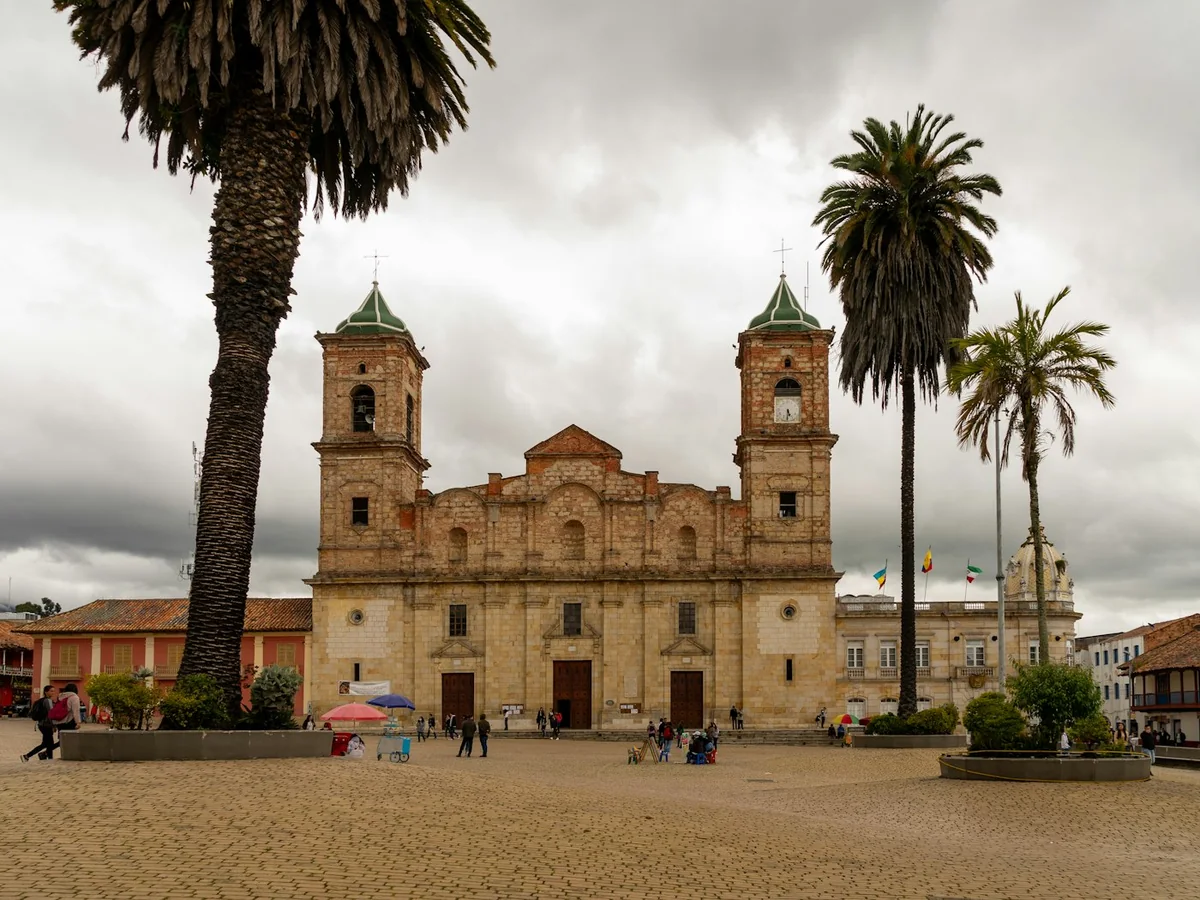
After the mine, a short walking tour of the town's colonial centre — including its own, separate cathedral in the main square — is folded into the same day, rather than left as something you'd have to find time for on your own.
The signature of the descent
Two hundred metres down, fourteen stations at a time
Every visit follows the same route: down into a single gallery cut through the rock, past fourteen small chapels carved by the miners who once worked this level for salt rather than for visitors. Only after the fourteenth station does the tunnel open into the Cathedral itself — three interconnected naves and, at the far end, a cross lit from its own base.
- 1 Surface
I — Jesus is condemned
The gallery opens here — the same tunnel the miners once cut for salt, long before it carried a single visitor.
- 2
II — Jesus takes up his cross
A scene carved directly into the salt wall, lit from below so the rock itself seems to glow amber.
- 3
III — Jesus falls the first time
The first of three falls in the sequence, carved along a stretch of tunnel that once moved ore, not people.
- 4
IV — Jesus meets his mother
Set at a bend in the gallery, where the passage briefly widens before narrowing again.
- 5
V — Simon of Cyrene helps carry the cross
Carved into the same rock face the miners once blasted for salt, not for a congregation.
- 6
VI — Veronica wipes the face of Jesus
One of the quieter chapels — this far down, footsteps and dripping water are most of what you hear.
- 7
VII — Jesus falls a second time
Roughly midway along the gallery's 386-metre run from the entrance to the naves.
- 8
VIII — Jesus meets the women of Jerusalem
A slightly wider chapel, built so a small group can pause without blocking the gallery behind them.
- 9
IX — Jesus falls a third time
By this point in the walk, the surface world outside has stopped feeling especially close.
- 10
X — Jesus is stripped of his garments
Carved near where the gallery first begins to widen toward the naves ahead.
- 11
XI — Jesus is nailed to the cross
The crucifixion scene, lit in the same warm amber as the rest of the descent.
- 12
XII — Jesus dies on the cross
Set just before the gallery opens out — one of the last stations before the naves.
- 13
XIII — Jesus is taken down from the cross
Near the threshold where the narrow tunnel gives way to the Cathedral's own scale.
- 14
XIV — Jesus is laid in the tomb
The fourteenth and last station, at the point the gallery opens into the three naves.
- ✦ ≈200 m
Three naves and the great cross
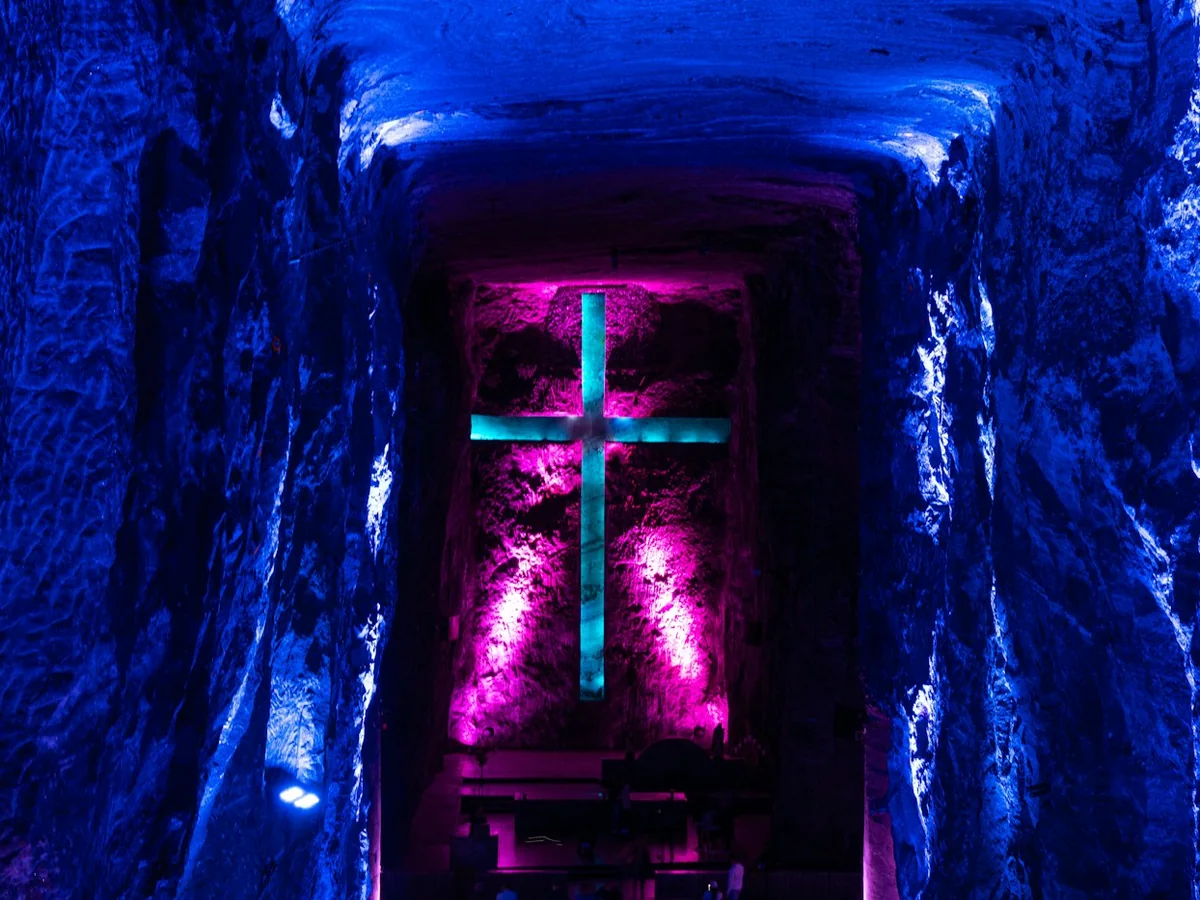
The gallery ends in three interconnected naves — birth, life and death — beneath four columns cut to represent the Four Evangelists, closing on a cross lit from its base, among the largest carved underground anywhere.
Colombian and operator sources usually round the depth to 180 metres; this page uses Wikipedia's slightly deeper 200-metre figure throughout, with both numbers explained in the practical guide below. Individual station depths are not published — the entrance gallery runs a measured 386 metres to the naves, and the fourteen stations are spaced along that run rather than at any officially marked depth, so only the start and the naves carry a figure here.
How the day is run
How the day is run
One pickup, one drive, one ticket counter — the practical shape of the day, in order.
Pickup, by neighbourhood
The van collects from a hotel or an agreed central point in Bogotá, typically in the morning, gathering the day's small group before heading north out of the city.
The road to Zipaquirá
The drive runs roughly ninety minutes across the Bogotá Savanna, past the plain's dairy farms and greenhouses, before climbing into the town of Zipaquirá itself.
Buying the one ticket that isn't included
On arrival, the group is taken to the Cathedral's own ticket counter, where entrance is priced by nationality and age and checked against ID — the driver-guide's local knowledge is what keeps this step quick rather than confusing.
The return leg
After the mine and a walking tour of the town's colonial centre, the van makes the same drive back, typically landing the group back in Bogotá by early evening.
The Cathedral, in pictures
The Cathedral, in pictures
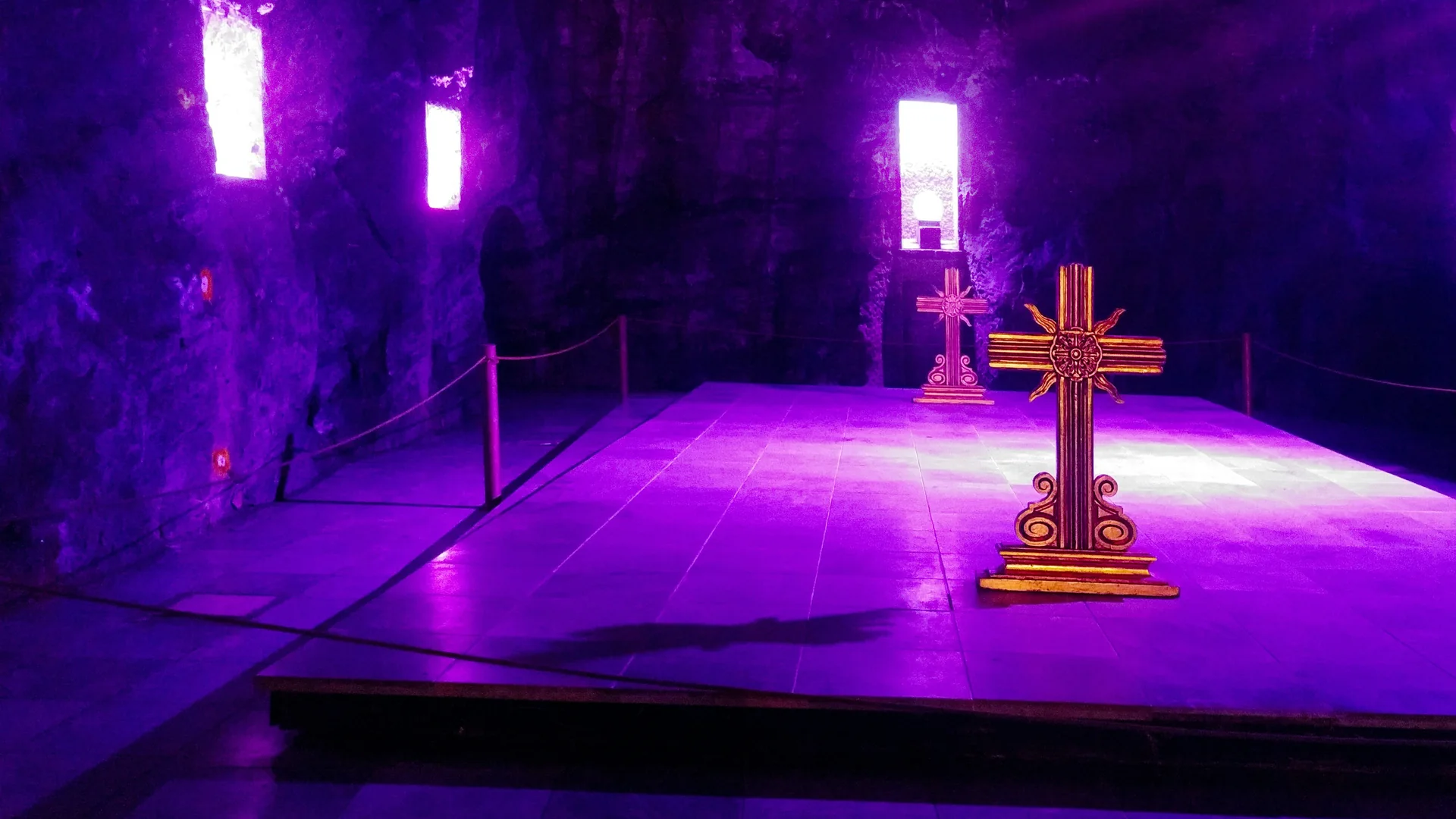
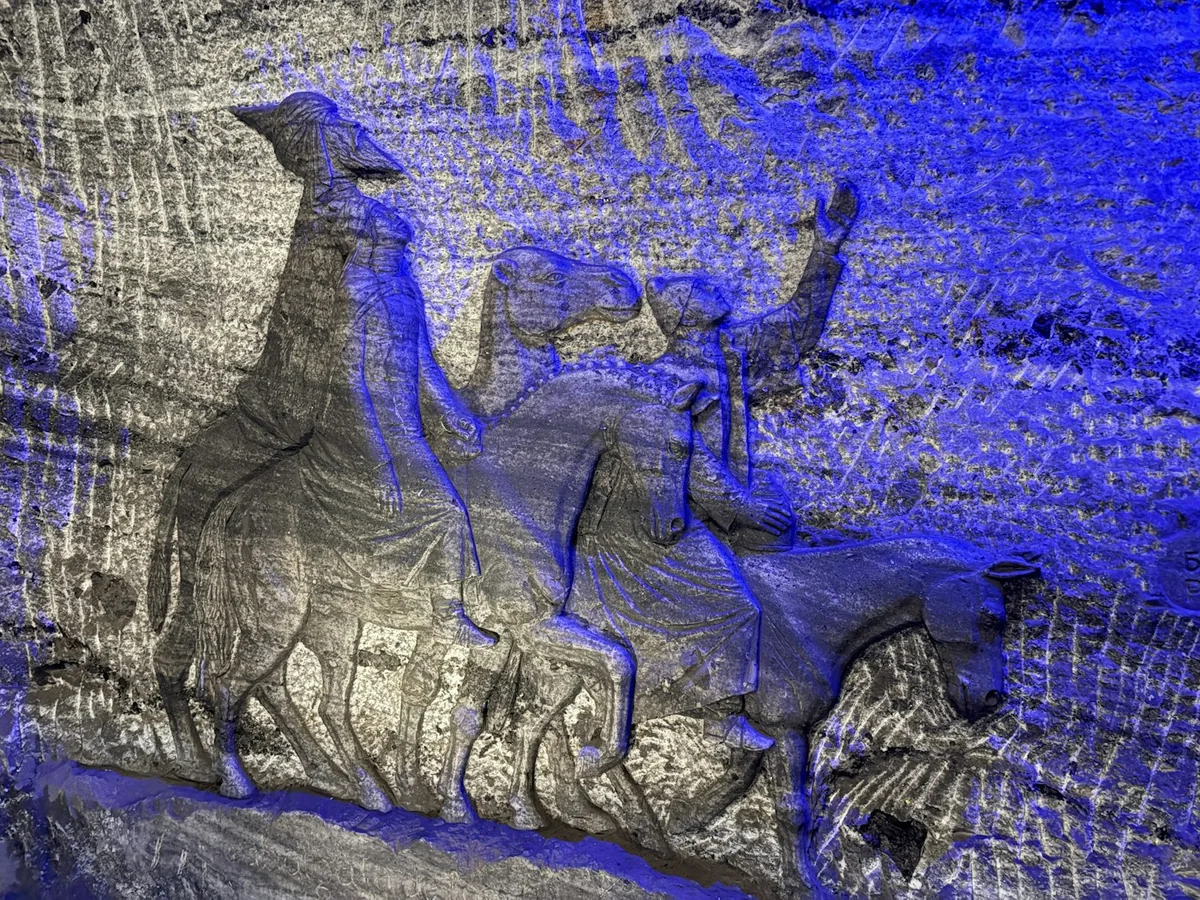
The illuminated crosses, the salt-carved reliefs, and the town of Zipaquirá above ground — real photographs of the Cathedral and its town, not photographs of this specific booking.
Ways to visit the Salt Cathedral
Ways to visit the Salt Cathedral
| Option | What it includes | Good to know |
|---|---|---|
| Guided group tour with pickup (this site) | Round-trip van transport from Bogotá, a driver-guide, an audio guide and a town walk — the Cathedral's own entrance ticket is bought separately on arrival | About 9 hours; the ticket counter's nationality/age pricing still applies at the gate |
| Private tour with lunch | The same transport and guide, plus a sit-down lunch and a smaller group | From roughly $66 per person — a higher-priced, less scheduled version of the same day |
| TransMilenio + intermunicipal bus, independently | TransMilenio to Portal Norte, then an intermunicipal bus onward — roughly 50–60 minutes from the portal, about 10,500 COP | No guide or audio guide; you queue for your own entrance ticket, mostly in Spanish |
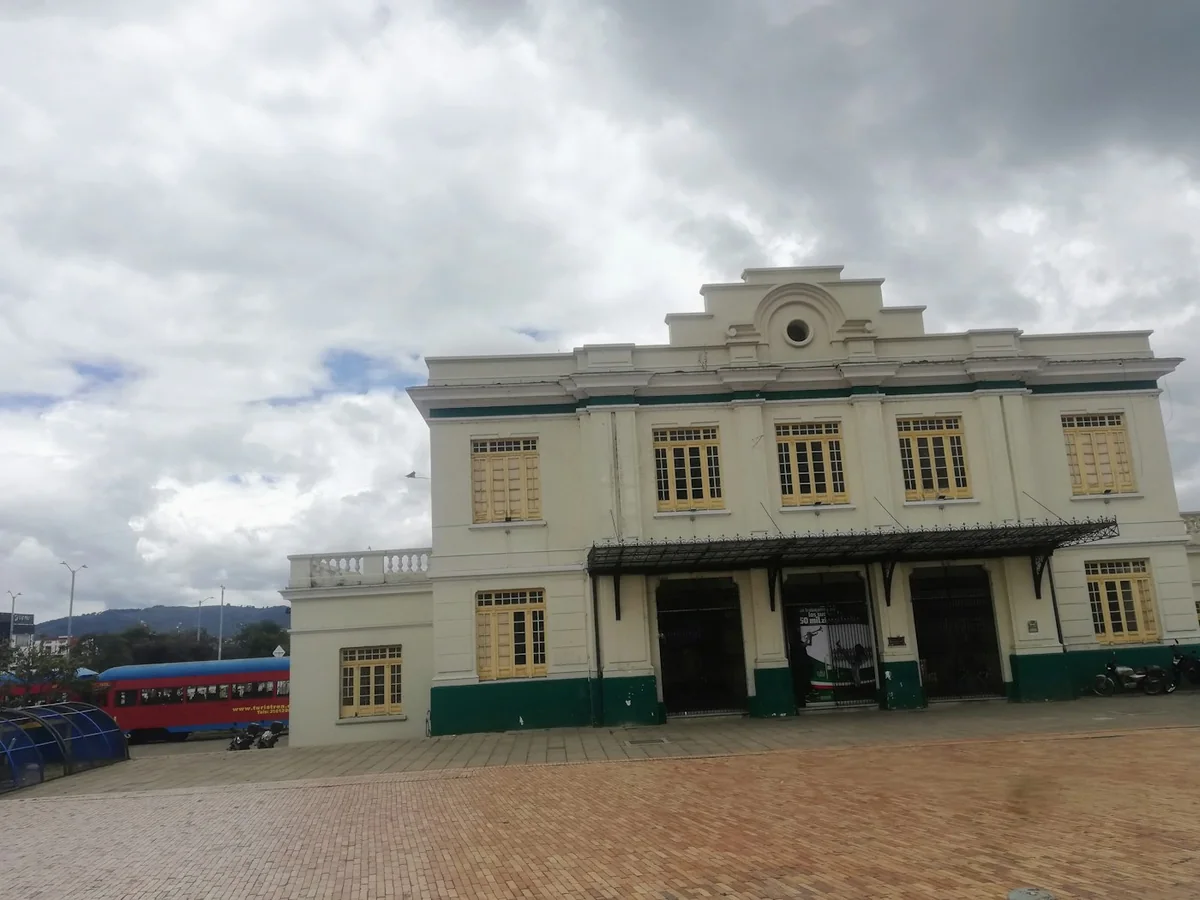
| Turistren tourist train | A scenic round trip via Usaquén or Gran Estación, roughly 60,000–70,000 COP | Runs Saturdays, Sundays and holidays only — not an option for a weekday visit |
Ways to book the visit
Find a date for your visit
Every option below is booked through GetYourGuide, with live availability and the final price in your own currency.
Planning your visit
Planning your visit
Bring your passport or ID
The Cathedral's entrance is priced by nationality and checked at the counter, so the document you'll book under is worth having on you, not left at the hotel.
Dress for two temperatures
The Bogotá Savanna is cool and often overcast at roughly 2,652 metres; the mine itself runs a steadier, milder temperature underground — a light layer covers both.
Decide your tier before you queue
Because the wrong ticket tier isn't refunded, knowing your nationality and age band before you reach the counter — or simply following the guide's lead — saves a second, avoidable purchase.
Save the walking for the gallery
The entrance gallery alone runs 386 metres before the naves even start, on a paved but uneven salt floor — comfortable, flat shoes matter more here than on most day tours.
Planning a Salt Cathedral visit
Planning a Salt Cathedral visit
Visiting the Salt Cathedral of Zipaquirá, step by step
A van pickup in Bogotá, ninety minutes north, a ticket counter that only matters once, and a gallery that runs 386 metres before the Cathedral even begins — the shape of the day, in order.
Read more →The Cathedral, explainedThe 14 Stations of the Cross, and how the Cathedral was carved
Miners carved a prayer chapel here in 1932 out of habit, not ambition. What stands now — fourteen chapels, three naves, one enormous cross — grew from that in two very different builds, six decades apart.
Read more →Getting thereGetting to the Salt Cathedral from Bogotá: train, bus or tour
A weekend-only tourist train, a fifty-minute city bus, or a guided van that removes the ticket-counter language barrier entirely — three real ways to get there, and the real trade-offs between them.
Read more →Beyond the CathedralThe salt mine's history, and the town of Zipaquirá
Salt was mined here for centuries before anyone carved a chapel into it. The town above ground has its own square, its own cathedral, and its own much older relationship with the same white rock.
Read more →Practical guidePractical: tickets, language, and what's actually underground
The nationality-priced ticket, the 180-versus-200-metre depth question, and what the tour's audio guide does and doesn't cover — the practical details worth knowing before you book.
Read more →Around the tripBogotá beyond the Salt Cathedral day trip
The Zipaquirá day takes a full day of a Bogotá stay. Here's how to plan the days around it, and what else in the city and the Savanna is worth the rest of your time.
Read more →FAQ
Salt Cathedral tour questions
What is the Zipaquirá Salt Cathedral Group Tour with Pickup?
It is a roughly 9-hour guided day trip from Bogotá to the Salt Cathedral of Zipaquirá, a Catholic church carved inside a working salt mine. The booking bundles round-trip van transport, a driver-guide, an audio guide for the underground walk, and a short walking tour of Zipaquirá's colonial centre. The Cathedral's own entrance ticket is not included and is bought on arrival.
Is the Cathedral's entrance ticket included in the price?
No. The tour covers transport, the driver-guide, the audio guide and the town walk; the Cathedral's own entrance fee — around 125,000 COP for a foreign adult at the time of writing — is paid separately at the on-site ticket counter, priced by nationality and age band.
How deep underground is the Cathedral?
Wikipedia gives a figure of roughly 200 metres underground for the Salt Cathedral, built within the tunnels of a working salt mine. The Cathedral's entrance gallery itself runs a measured 386 metres from the surface end to the three naves at the far side — see the practical guide below for how that compares with the figure most tour operators quote.
What are the 14 Stations of the Cross inside the mine?
They are fourteen small chapels carved in salt relief along the entrance gallery, each depicting one scene of Christ's Passion in the traditional order — from his condemnation through to the tomb. They were carved by the mine's own workers and lead, in sequence, to the Cathedral's three main naves.
Do I need to book my own entrance ticket in advance?
Not for this tour — the driver-guide takes the group to the right counter on arrival. If you visit independently, note that the official ticket office prices entry by nationality and age band, checks ID at the gate, and does not refund a ticket bought at the wrong rate; you would need to buy again at the correct one.
How long is the day, and what should I wear?
About 9 hours door to door: roughly ninety minutes' drive each way, and around two hours at the Cathedral itself. The town sits at roughly 2,652 metres and is often cool and overcast, while the mine runs a steadier, milder temperature underground — a light layer works for both, along with comfortable, flat shoes for the 386-metre entrance gallery.
Is there a private or independent way to visit instead?
Yes. A private version of the same tour, with lunch included and a smaller group, runs from around $66 per person. Independent travellers can also reach Zipaquirá by TransMilenio to Portal Norte and then an intermunicipal bus (roughly 50–60 minutes from the portal, about 10,500 COP) or, on Saturdays, Sundays and holidays, by the Turistren tourist train — both leave the entrance ticket and the language of the counter to you.